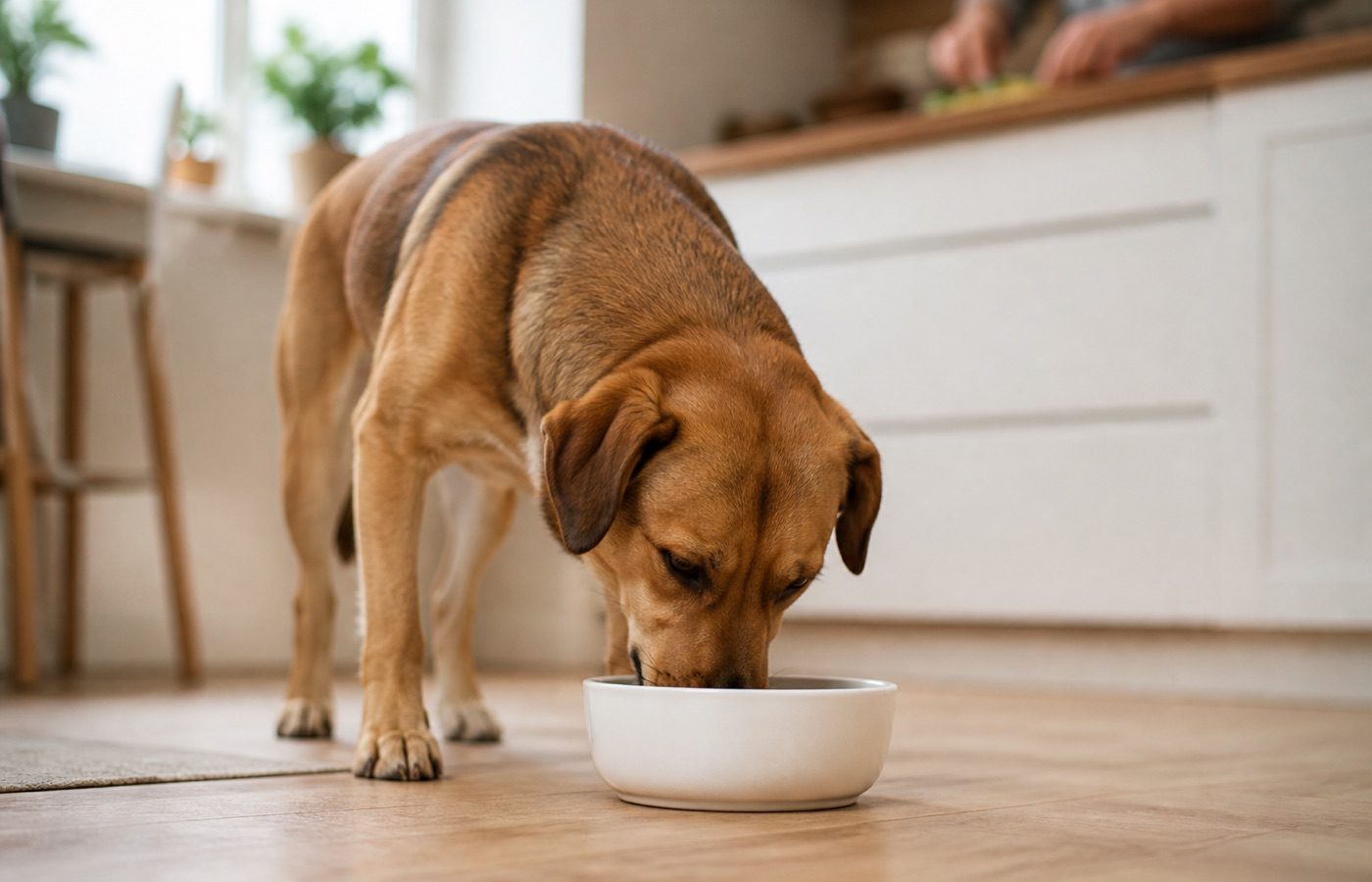
Almost every case of “this new food disagreed with my dog” is really a case of the changeover happening too fast. A dog’s gut bacteria are tuned to whatever they have been eating for months. Swap the whole bowl overnight and that population has to reorganise in a hurry, which is exactly what loose stools are.
The ten-day rule
Spread the change across seven to ten days:
- Days 1–3: 25% new food, 75% old
- Days 4–6: 50% new, 50% old
- Days 7–9: 75% new, 25% old
- Day 10: 100% new food
If stools soften at any stage, hold at the previous ratio for three extra days rather than pushing on. Going backwards for a few days costs nothing.
Signs it is going well
Firm stools, steady appetite, no gas worth mentioning. A slightly darker or lighter colour is normal — a change in fibre source will do that.
Signs to slow down
Loose stools lasting more than two days, visible mucus, or a dog who suddenly loses interest in food. Drop back a stage. If it persists past a week at the lower ratio, the new food may simply not suit them, and it is worth changing protein rather than pushing through.
When speed is unavoidable
Sometimes a food gets discontinued and you have no overlap. In that case, feed slightly smaller meals more frequently for the first three days and add a spoonful of plain canned pumpkin — the soluble fibre gives the gut something predictable to work with.
If your dog has a history of a sensitive stomach, stretch the whole thing to fourteen days. There is no prize for finishing early.